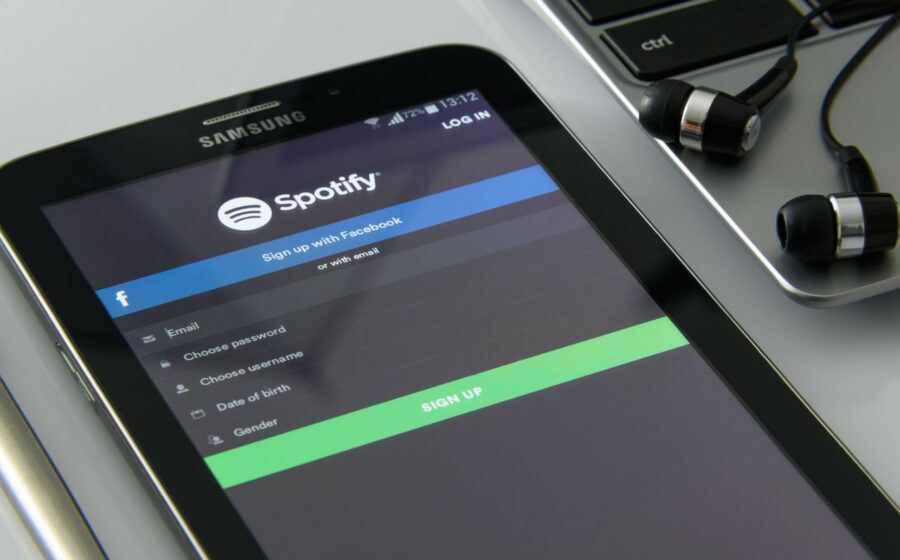
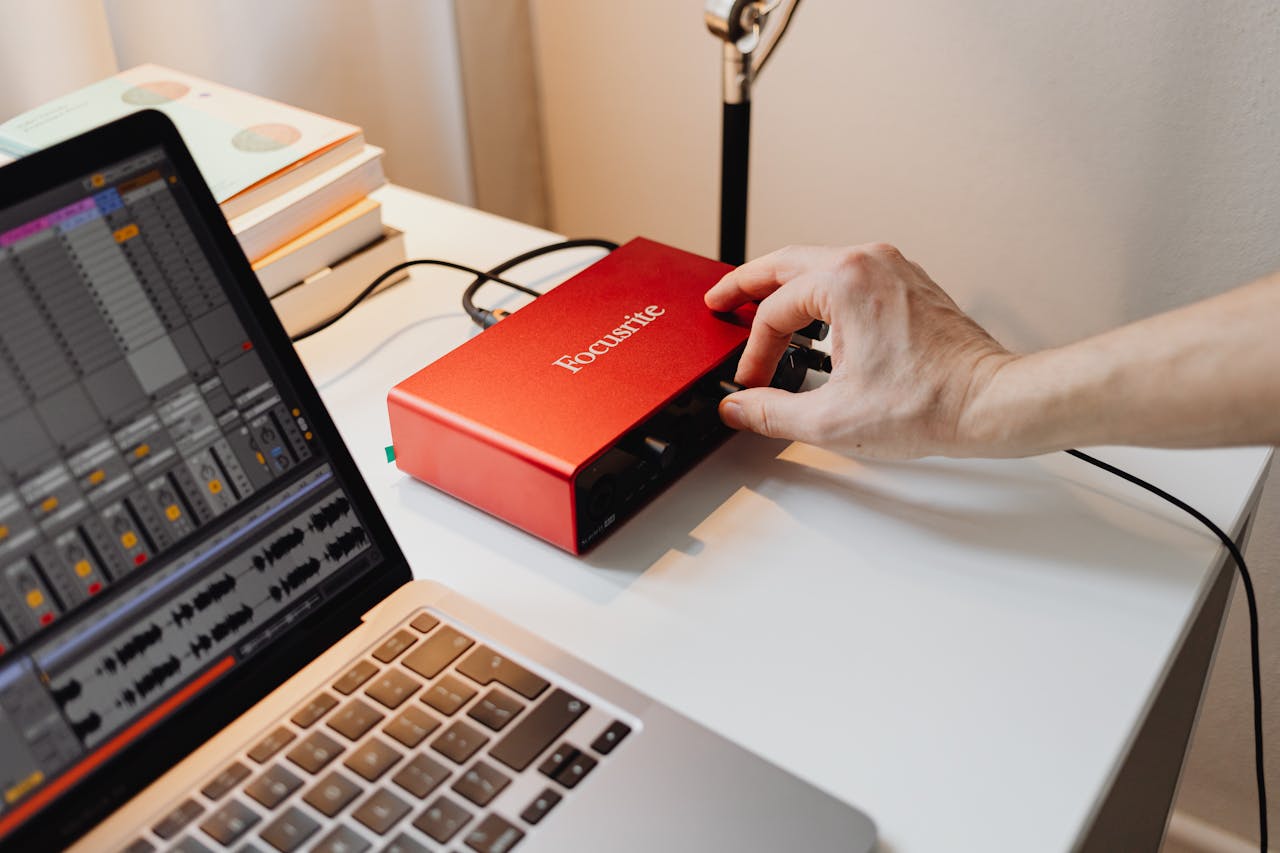
Three names come back at every indie artist release: DistroKid, TuneCore, CD Baby. These distributors control a massive share of the flow feeding Spotify, Apple Music, Deezer, Amazon Music, and other DSPs. Their job? Deliver your music to platforms. They don’t do anything else. Choosing the right model actually depends on your release cadence, your relationship with cash, and most importantly what you plan to do once the music is online. This guide breaks down 2026 real costs, traps, and a question most artists forget: a distributor never replaces a marketing smartlink.
Contents
, What a distributor is (and isn’t)
, DistroKid in 2026
, TuneCore in 2026
, CD Baby in 2026
, Raw comparison of the three
, Which model for which profile
, The most common mistake: confusing distributor and smartlink
, Checklist before subscribing
, FAQ
What a digital distributor is (and isn’t)
A digital distributor is a technical gateway. It takes your audio master, your artwork, and your metadata, then sends them to DSPs, Spotify, Apple Music, Deezer, YouTube Music, Tidal, Qobuz, Amazon Music, Napster. Without one, you can’t put a track on these platforms. It’s the equivalent of a wholesaler in physical record distribution.
What it doesn’t do: it doesn’t run your marketing. It doesn’t create Meta campaigns. It doesn’t track clicks from your Instagram post to your landing page. And most importantly, it doesn’t build your fan base. It doesn’t centralize links to the eight DSPs on a single shareable URL. These bricks are marketing territory and belong to separate tools, smartlinks, tracking pixels, fan CRM.
Confusing the two is the most expensive mistake for an indie artist starting out. We come back to it at the end.
DistroKid in 2026: the volume play
Pricing model
Annual subscription. Three tiers: Musician at $24.99/year for unlimited releases, Musician Plus at $44.99 for two artists and advanced options, Label from $89.99. Prices rose in 2026: Musician went from $22.99 to $24.99, Musician Plus from $39.99 to $44.99.
Commission
0%. DistroKid takes nothing from streaming royalties. 100% stays with the artist.
Strength
The best cost-per-release ratio for an artist releasing more than four tracks per year. Delivery speed is the fastest in the market, 24 to 72 hours to most DSPs depending on the destination platform.
Trap
If the subscription stops, the music is pulled from platforms after the grace period. To keep it online for life, DistroKid charges a Leave a Legacy option. That’s the hidden cost many artists discover the day they think about taking a break.
TuneCore in 2026: the structured play
Pricing model
Annual subscription. Rising Artist at $24.99/year for unlimited basic releases. Professional at $54.99 for 1 year with advanced features, publishing administration, fine tracking, integrated marketing tools.
Commission
0% on streaming. TuneCore offers a commission-based publishing administration service (typically 20%) to collect international publishing royalties, composition, sync, mechanical. Relevant for a songwriter with an active catalog.
Strength
Adjacent services (SiriusXM, YouTube Content ID, publishing, sync, analytics) are more polished than elsewhere for an artist beyond pure DIY.
Trap
The price climbs fast once you activate extras. And as with DistroKid, ending the subscription triggers the gradual removal of tracks.
CD Baby in 2026: the permanent play
Pricing model
One-time payment per release. $9.99 for a single. $14.99 for an album.
Commission
9% on streaming royalties, for life. The artist takes 91%, CD Baby pockets the remaining 9% permanently.
Strength
Once paid, the release stays online on every platform, for life, with no subscription. For an artist who releases an EP every three years and wants their catalog always accessible without active management, it’s unbeatable.
Trap
For a high-cadence artist, four EPs a year, the cost explodes fast. Chartlex calculated that four EPs at CD Baby come to $59.96, more than twice DistroKid’s annual rate. And the 9% lifetime commission becomes a math anchor if a track explodes years later.
Raw comparison of the three in 2026
Payment model: DistroKid = subscription. TuneCore = subscription. CD Baby = one-time payment per release.
Annual entry price: DistroKid $24.99. TuneCore $24.99. CD Baby $9.99 (single) or $14.99 (album) per release.
Streaming commission: DistroKid 0%. TuneCore 0%. CD Baby 9% for life.
Persistence if you stop: DistroKid = removal (paid Leave a Legacy option). TuneCore = removal. CD Baby = permanent.
DSP delivery speed: DistroKid 24-72h. TuneCore 3-5 business days. CD Baby 3-5 business days.
Break-even (Chartlex, 2,400 campaigns analyzed): DistroKid wins from 4 singles per year or more. CD Baby wins if fewer than 2 releases per year and subscription isn’t tolerated.
DistroKid, TuneCore, CD Baby: three distributors covering the same DSP catalog, but three billing philosophies that decide long-term profitability.
Which distributor for which profile
DIY artist with steady cadence (≥4 releases/year)
DistroKid is mathematically unbeatable. $24.99/year for unlimited releases, 0% commission, fast delivery. The only real question is managing the aftermath if the artist wants to stop paying, hence the value of regularly exporting metadata and backups.
Active songwriter in sync and publishing
TuneCore Professional. The publishing administration service lets you collect international publishing royalties without creating a publishing company. For an artist placing tracks in ad sync or TV, the differential pays off fast.
Artist with stable catalog and few releases
CD Baby. An EP every three years that stays online for life with no subscription deduction. The 9% commission is the price of long-term peace of mind. Acceptable as long as the track doesn’t become a hit, at which point the 9% lifetime cut stings.
Indie label with 10+ roster
DistroKid Label or TuneCore Label. Both offer bulk upload and multi-artist reporting. At this stage, the real criterion is the API and the multi-artist dashboard.
The most common mistake: confusing distributor and smartlink
This is the point 80% of beginning artists miss. Let’s say it simply.
A distributor puts your music on platforms. It’s technical plumbing to Spotify, Apple Music, Deezer, etc. It doesn’t handle your audience.
A smartlink is a single link that routes each fan to their preferred listening platform. You put this link in your Instagram bio, in your stories, on your site, in your Meta Ads campaigns. When a fan clicks, they pick Spotify or Apple Music, and your tool records the click, the Meta pixel, and the action.
Without a smartlink, you have a binary choice: either you put the direct Spotify link in bio (and Apple Music fans struggle), or you list seven different links (and no one clicks). The smartlink solves the problem. It also tracks clicks, which turns your music marketing from blind to measurable.
Distributor = your music on DSPs. Smartlink = your fans to DSPs. Two different bricks.
Native or third-party smartlinks: the hidden data-control question
The three major distributors each offer their smartlink solution. DistroKid built HyperFollow in-house: single page for all platforms, integrated Spotify pre-save, automatic fan email collection and city-level geolocation. TuneCore offers LinkShare in its base version, no analytics, and officially recommends third-party Feature.fm for advanced features. CD Baby integrated Show.co after acquiring it in 2019. And CD Baby itself is now, since February 2026, a subsidiary of Virgin Music Group, Universal Music Group unit.
In each case, the fan data captured by the smartlink, email, geolocation, click, pre-save, DSP conversion, doesn’t live with the artist. It lives with the distributor or their third-party provider. In CD Baby’s case, it now lives in a major’s infrastructure.
A smartlink that belongs to your distributor or their provider doesn’t belong to you. Your fans are registered with them, not you.
The day you change distributor, the fan base stays with the old one. If your platform gets acquired by a player you didn’t choose, your audience changes hands without consent. If a third-party provider modifies its terms, you have no leverage to say no.
If you are weighing a dedicated smartlink tool against the one bundled with your distributor, we put Linkfire, Feature.fm and band.stream side by side on pricing, pixels and data export.
Fan data control: a key stake
That’s precisely where band.stream takes a different market position. Primary fan data, email, listening territory, smartlink interactions, is stored at IONOS Germany and remains the artist’s legal property. Portability right guaranteed by GDPR article 20: the artist can at any time export their complete base in CSV format, delete it, or plug it into their own CRM or email tool.
External analytics tools, Google Analytics 4, Meta Pixel, Google Tag Manager, are natively integrated in band.stream but stay activatable, deactivatable, and configurable per-campaign through a native GDPR consent manager, not a third-party plugin. The artist explicitly chooses which measurement layer to activate, and their fans are informed transparently. The operator is a Paris-based team, contract under French law, French CNIL jurisdiction.
band.stream doesn’t rent you your audience. It hands it back, email by email, exportable, portable, under French law.
Mainstream smartlink tools: Linkfire ($25-46/month), Feature.fm, ToneDen, Hypeddit. On the French side, band.stream offers the same brick at €5/month on the Pro plan, about five times cheaper than Linkfire, with three differentiators: primary ownership of the exportable fan base (GDPR article 20), contract under French law and CNIL jurisdiction, native GDPR consent manager to enable or disable GA4 and Meta Pixel per campaign.
Checklist before subscribing to a distributor
Step 1, Estimate your real cadence. More than 4 releases per year? Subscription. Fewer than 2 releases per year? One-time payment.
Step 2, Verify covered DSPs. The three cover Spotify, Apple Music, Deezer, Amazon Music, YouTube Music, Tidal. Check niche DSPs (Napster, Qobuz, Boomplay for Africa) on the distributor’s current sheet.
Step 3, Read the removal clause. How long does the music stay online if you stop paying? DistroKid = gradual removal. TuneCore = gradual removal. CD Baby = permanent.
Step 4, Verify YouTube Content ID and SoundExchange treatment. Often a paid option. Critical for long-tail monetization.
Step 5, Read the AI policy. Since 2025, the three distributors have published specific rules on accepting AI-generated tracks and labeling them. Verifiable before signing.
Step 6, Prepare the smartlink in parallel. The distributor will never be enough to handle your release marketing. Plan a smartlink with Meta Pixel and GA4 tracking before release date.
FAQ
Can you stack two distributors for the same track?
No. A single recording can only be distributed by one distributor at a time on major DSPs. Stacking creates duplicates that are automatically pulled and can suspend the account.
Can I change distributor after releasing a track?
Yes. Migration goes through a redelivery or transfer procedure. Algorithmic playlists retain the ISRC ID, so accumulated capital isn’t lost if the metadata follows. Plan 4 to 8 weeks of transition.
Should a French artist favor a French distributor?
Not necessarily. The three cover France. A French distributor like iMusician may offer more responsive French-language support, but it’s not an SEO or algorithmic criterion on the DSP side.
Does the distributor influence chances of entering an editorial playlist?
Indirectly. Some distributors have more direct relationships with editorial teams, for example TuneCore or The Orchard, and can push your pitches. But playlist entry plays out mostly on track quality, pre-release data signal, and the Spotify for Artists pitch.
How much does an artist really earn per stream in 2026?
Between $0.003 and $0.005 per stream on Spotify per 2026 streaming calculators. The final net depends on distributor commission, label split, and the artist’s collecting society status (ASCAP/BMI in the US, SACEM/SPEDIDAM in France, PRS in the UK).
The band.stream angle: the brick missing after the distributor
Ultimately, choosing your distributor is a technical decision. But the real battle starts when the music is online. That’s when the smartlink, tracking pixel, and first-party fan data become the marketing infrastructure without which a track doesn’t take off. Most artists neglect this layer until a failed retargeting makes them understand the opportunity cost.
Smartlinks & music marketing, no fluff.
Centralize smartlinks, ad campaigns, and analytics in a single tool. €5/month, ready in 30 seconds, data hosted in the EU.
Request access →