On June 10, 2026, Universal Music Group planted its hip-hop flag on Maghreb soil. Casablanca becomes the home of Def Jam North Africa. Three names lead the way: Najm, SHR, and Aujiss. For independent francophone artists, urban-rap labels, and distributors with Maghreb catalogs, the move reshapes the playing field. The Middle East and North Africa region posted +15.2% growth in 2025 according to IFPI. That makes it the second fastest-growing region on the music planet. Here is what it means concretely.
A deployment in the works since 2019
UMG did not arrive in Casablanca by chance. The major has operated locally under the UM Morocco brand since 2019. In 2022, the subsidiary expanded to a full artist and label services offer, according to Music Week. The creation of a dedicated Def Jam North Africa division changes the scale entirely. Casablanca becomes the official hub to sign and develop hip-hop artists from the Maghreb.
The Def Jam name remains one of the most powerful in the record business. Founded in 1984 in New York by Rick Rubin and Russell Simmons, the label carried LL Cool J, Public Enemy, Jay-Z, Rihanna, Kanye West, and Justin Bieber. UMG now uses it as a geographic expansion banner. Def Jam Africa, dedicated to sub-Saharan Africa, opened in 2020. Def Jam Recordings UK has been active since 2021. North Africa completes the map.
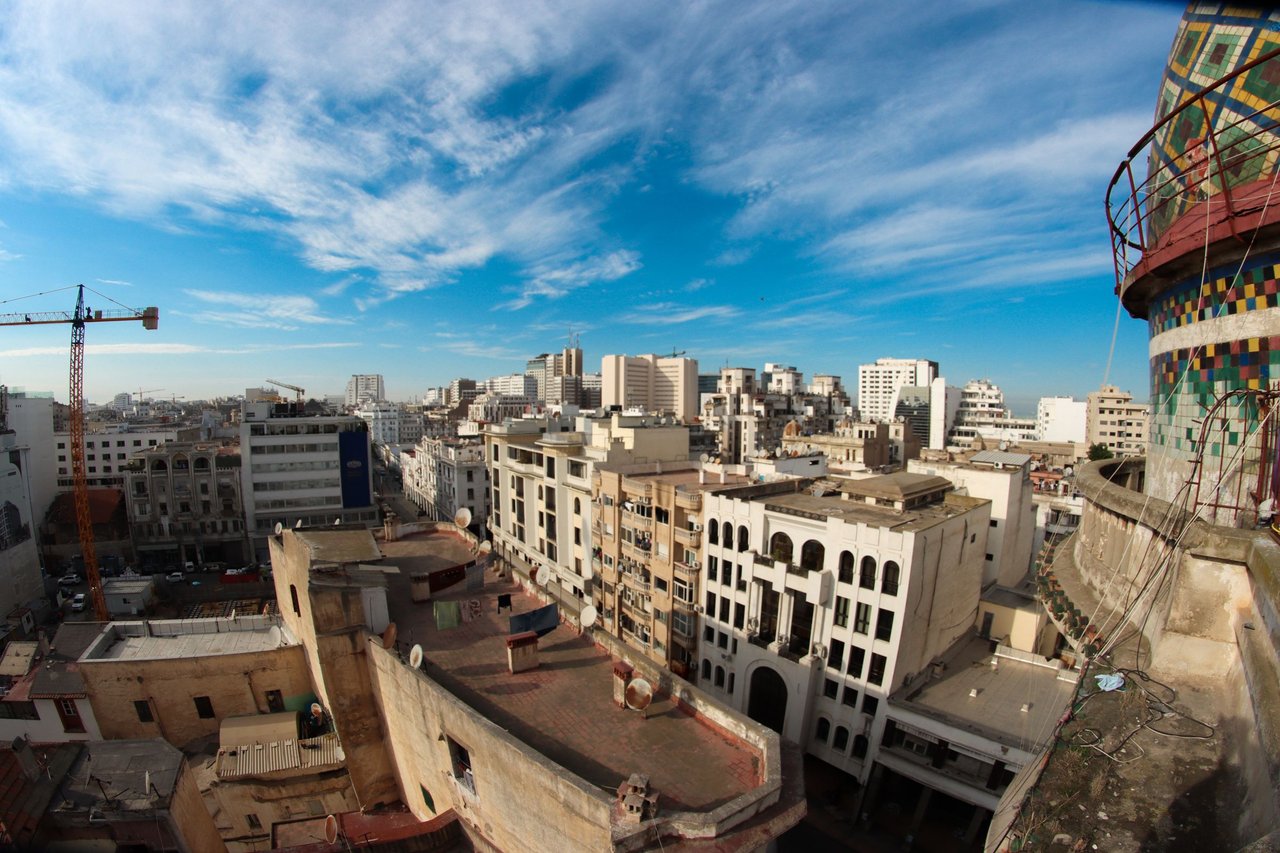
Casablanca, the official Maghreb hub of Def Jam North Africa
The launch event took place on the evening of June 10, 2026, in Casablanca. Artists, songwriters, and cultural leaders from Morocco, Algeria, and Tunisia attended the gathering according to Music Business Worldwide. The division will cover the entire Maghreb from Morocco, not only the Moroccan market.
Three signed artists open the roster. Najm, already confirmed at Def Jam, takes the lead position. Newcomers SHR and Aujiss complete the first wave. The subsidiary also announces active partnerships with Moroccan producers Oldygothesound, Bayadis, and Nouvo. Music Ally notes that this mix of established artists and structural producers aims to build an ecosystem rather than a simple catalog.
The move exposes Maghreb hip-hop to the most polished promotion machine in the world — from Atlanta to Lagos via Paris.
Why now: MENA data tips the strategy
The numbers explain the timing. According to the IFPI Global Music Report 2026, the Middle East and North Africa region recorded +15.2% growth in 2025. That ties for second-fastest globally with Sub-Saharan Africa, behind Latin America North at +17.1%. The global record market only grew +6.4% over the same period, hitting USD 31.7 billion.
Streaming dominates MENA revenue. According to IFPI data relayed by Billboard Pro, streaming represents nearly 97% of recorded music revenue in the zone. Anghami, Spotify, and YouTube Music have massively expanded their subscriber bases over two years. Deezer, strong on francophone Africa, plays its own regional card. For a major like UMG, this is the chance to arrive early — while listening habits are still being shaped.
Anghami deserves a special mention. The Abu Dhabi-based platform remains the regional leader on Arabic-language music. Its editorial playlists have become unavoidable for Maghreb artists. A major that wants to place a single in the zone has to deal with Anghami as much as Spotify. Def Jam North Africa will need to build its own editorial relationship with these local platforms — otherwise its catalog stays invisible in the target markets. The streaming market is also marked by a structural saturation that complicates algorithmic ranking for any newcomer.
The creation of Def Jam North Africa also responds to a structural movement: francophone music. French rap exploded between 2018 and 2024 thanks to headliners signed to French majors. Morocco and Algeria represent the next reservoir of lyrical talent. These bilingual Arabic-French artists target both the diaspora audience and the MENA audience. The francophone galaxy is preparing for a new expansion cycle. The context is favorable: the TikTok music promotion shift following the UMG 2026 deal has already changed the visibility rules for indie artists.
What it changes for francophone independents
A major arriving on a territory is rarely neutral for independents. Three dynamics deserve attention over the next twelve months.
For independent rap or urban artists
Def Jam North Africa will publish, communicate, and occupy ground. The visibility bar will mechanically rise on Spotify, Apple Music, Deezer, and YouTube Music. To exist in this new landscape, the independent artist must bet on what a major does badly: fan proximity, release flexibility, first-party data collection. This is exactly the territory smartlinks tools cover — owning audience instead of renting it from the DSPs. A spontaneous drop, an opportunity feature, a release on a favorite single: indies can do it in 48 hours. A major rarely under six weeks.
For independent labels and distributors
A major moving in means localized marketing budgets, A&R contacts, and media relays. Indie francophone labels distributing Maghreb rap need to rethink their release timing strategy. Dropping a single the same week as a Def Jam release means fighting in the shadows. Territory-level listening data becomes critical: knowing whether the engagement spike comes from France, Morocco, or Algeria is essential to calibrate Meta and YouTube campaigns. Without that granularity, ad budgets are sprayed blind.
For Maghreb publishers and producers
Def Jam explicitly names partnerships with Oldygothesound, Bayadis, and Nouvo. A francophone publisher or producer wanting to ride the wave must build their own credits and catalog before competition explodes. The window is open for 12 to 18 months. Beyond that, margins on splits will compress as majors capture the best topliners.
The flip-side risk: standardization of the Maghreb sound
Any major implantation comes with side effects. When mainstream US rap globalized, local sounds were sometimes diluted to match the Billboard chart formula. Def Jam North Africa will have an incentive to sign artists with a universal sound rather than celebrate regional specificities. Independent francophone artists can occupy that identity niche: Maghreb rap that owns its language, its samples, and its local production.
The argument is also commercial. Spotify editorial playlists for North Africa and specialist platforms like Anghami reward cultural anchoring. The independent artist who chooses the indie path keeps their release calendar, splits, and data — and can package the whole on a single smartlink. A tool like band.stream already centralizes this logic for francophone artists, with territory-level analytics and a native GDPR consent manager hosted in the European Union. It is up to independents to take ownership before majors set the tempo.
What next? Three signals to watch
First signal: the next IFPI 2027 report. If MENA exceeds +18% in 2026, the market will enter a major-rush mode. Warner Music and Sony Music will mechanically follow with their own local divisions. Second signal: the signing of francophone Maghreb headliners by Def Jam North Africa. A major signing on the level of Soolking, Lartiste, or Lacrim would validate the cross-territory ambition and trigger a wave of imitation at Warner and Sony.
Third signal: SACEM (the French collective management society for music authors) distribution numbers to Moroccan and Algerian rights holders. SACEM publishes its consolidated figures every spring. A marked rise in remittances to the MENA zone would indicate that money actually follows the editorial movement. If the gap stays wide, indie artists will have a decisive argument to defend their splits against incumbent majors. Our recent analysis of SACEM 2025 distributions to independent artists already details this mechanism.
For francophone artists, labels, and publishers, the message is clear: the window is open. Casablanca becomes a new center of gravity for global urban rap. Either you use it as an accelerator, or you watch the train leave. The future of francophone independents will be decided on their ability to occupy the space before majors lock it down — through data, through flexibility, through assumed cultural anchoring.
The industry has already lived this scenario in Latin America between 2017 and 2022. Majors opened their local offices in Mexico City, Bogota, and São Paulo. Independents who anticipated signed very favorable publishing deals. The others saw their margins compressed by 30 to 40%. The lesson holds for the Maghreb: act now, or absorb it in eighteen months.