
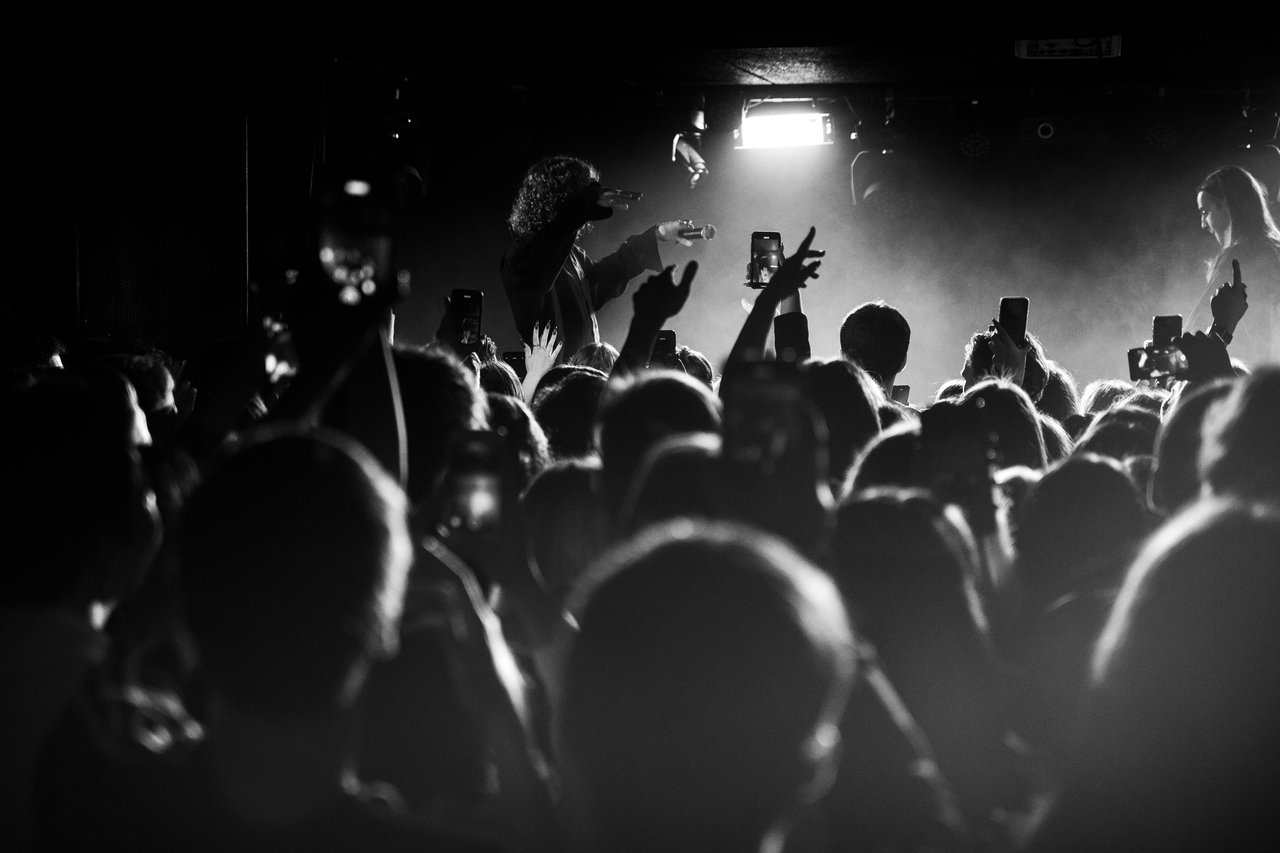
Spotify Reserved officially launched on June 18, 2026 in the United States. The Swedish platform now sets aside two concert tickets for every superfan it identifies, before the general onsale. The partnership with Live Nation runs multiple years. First artist on board: U.S. indie-pop project Role Model. Good news for fans tired of bots. Awkward question for artists: who really controls the Spotify Reserved superfan list?
Spotify Reserved: what Spotify just rolled out in the U.S.
On June 18, 2026, Spotify activated its Reserved by Spotify program in the United States. The mechanic is simple. For each eligible tour, the platform identifies its Premium superfans. It sets aside two tickets for them before the general onsale opens. Selected subscribers get an in-app notification and an email. They then have around 24 hours to buy, pick a date and a section through Ticketmaster.
The deal with Live Nation is a multi-year partnership. The U.S. promoter is the only live operator on board at launch. The first artist to activate the system is Role Model, an indie-pop project covered by The Hollywood Reporter since 2023. The purchase window for his tour dates opens on June 23, 2026, according to TechCrunch.
The program is locked behind three conditions: be a Premium subscriber, be at least 18, live in the U.S. Spotify says it plans to extend the feature to other markets and to developing artists. No firm timeline is communicated for Europe or France yet. Rollout will happen “in stages, from the biggest tours in the world to developing artists,” the platform states in its announcement.
How Spotify identifies a superfan for Reserved
The platform does not publish the exact formula. It treats that opacity as an anti-bot shield. Several signals still feed the decision. Listening volume matters. So does the diversity of the artist’s catalog actually consumed. Session cadence and consistency over time weigh as much as raw stream count.
Add to that library saves, outbound shares to other apps, and geolocation versus announced tour dates. One more signal carries weight: the organic nature of the behavior. An account that plays the same song on loop 24/7 will be filtered out. Spotify is hunting human fans, not metrics inflated by scripts.
Spotify sums up the logic in a quote relayed by Music Business Worldwide:
“We identify an artist’s most dedicated fans through a 360-degree view of fan activity: sharing, saving, active listening, frequency and cadence of listening, and whether the behavior is organic and human.”
— Spotify, official statement, June 18, 2026
On the platform side, the language is “dedicated inventory” set aside for the biggest fans. On the listener side, one detail matters. Spotify acknowledges there will be more superfans than available seats. Not every loyal listener will get an offer. The system is a filter, not a blanket gift. The exact ratio between superfans detected and tickets available is not disclosed.
The real question: where does superfan data live?
This is the actual debate. A superfan ticketing layer is useful to three players. To fans, who dodge bots and inflated secondary-market prices. To Live Nation, which lowers friction and locks in a Premium audience. And to Spotify, which turns its recommendation engine into a direct transactional lever. One fourth player stays too quiet in this equation: the artist.
The artist does not receive the superfan list. The artist receives a number of tickets sold. The granular data — who these fans are, where they listen, what else they consume — stays on the platform’s servers. This is exactly the pattern Last.fm called out last year after its buyout: listening data should return to artists, not stay captive inside one app. Our Last.fm analysis already covered that pivot.
The context makes the topic urgent. Spotify paid out more than $11 billion to the industry in 2025, per its Loud & Clear 2026 report relayed by Hypebot. Independent artists and labels captured half. More than 13,800 artists cleared $100,000 in royalties from the platform alone. The indie share has never been more visible. But that visibility stops at the royalty line. It does not cross the first-party data wall.
For context, SACEM (the French collective management society for music authors) distributed €1.5 billion to 663,000 creators and publishers in 2025, up 9%. On the recorded side, SNEP (the French recorded music trade body) reported that French recorded music revenue crossed the billion-euro line for the first time since 2007. The market is recovering. But the post-stream value chain — ticketing, merch, sync, fan clubs — is still mostly operated by platforms that are neither SACEM nor the label. Spotify Reserved consolidates that concentration.
Another signal deserves attention. The Loud & Clear 2026 report indicates that half of all Spotify royalties now go to independent artists and labels. The indie segment carries equal weight with the majors on the platform. Yet none of the fan data that would make it actionable is shared back with those artists. Superfan ticketing amplifies that paradox. The better an indie artist performs on Spotify, the more the platform builds a commercial asset around their fans. With no data offset returned to the creator.
Add the broader context. The IFPI Global Music Report 2026 confirmed that recorded music revenue grew at a steady pace last year, with paid streaming still anchoring the model. Across the indie-music value chain, every percentage point of margin is now contested between platforms, distributors, labels, managers, and creators. In that landscape, the side that owns the actionable fan dataset gains the structural upper hand. Spotify Reserved is, in essence, a small but telling skirmish in that wider competition for who keeps the fan relationship.
The concrete risk for the indie artist
Without access to the list, there is no follow-up. No newsletter to the fans who did not buy. No Meta retargeting on those who clicked without converting. No segmentation for the next release or the next tour. The superfan stays a Spotify asset, never an artist asset.
What this teaches about 2026 marketing strategy
First-party data is once again the top strategic ground. Capturing an email, a geolocation, a pre-save event on a URL the artist controls — not the platform — has become non-negotiable for any artist who wants to tour sustainably. Spotify Reserved does not replace that work. It makes it more visible.
Implications by profile
For the independent artist
The useful instinct is twofold. Keep feeding Spotify to benefit from the Reserved signal on future tours. But pair every release with an owned capture layer: a smartlink with a trackable pre-save, newsletter capture, Meta pixel on the landing. Otherwise the superfan stays a number in a dashboard you do not read. Our Spotify Gen Z 2026 report analysis details the expected conversion patterns on that target.
For the pro artist
The challenge is to cross platform data with an owned fan CRM. A Spotify Reserved superfan attending a show should be identified at the exit, ideally via QR code at merch or email capture at entry. Reserved then becomes an acquisition channel for already-qualified superfans. Not an end in itself. The opportunity cost of an uncaptured fan grows with the size of the fanbase.
For the label and the distributor
Reserved adds pressure on the label’s value-add. If the platform talks directly to the fan, margin shifts toward those who can activate the data behind. Investing in a multi-artist analytics stack and consolidated smartlink tools stops being a comfort. It becomes a measurable competitive edge. The user-centric model pushed by Cantilever and thirteen indie labels answers the same logic: move the data closer to the creator.
Taking back fan data through your own smartlink
Spotify Reserved is good news for ticketing. It is also a useful reminder for 2026. The music marketing layer that belongs to the artist runs on tools the artist controls. Owned smartlink, owned pixel, active newsletter, readable multi-platform attribution. Everything else is borrowed from a platform that can change its rules overnight.
Smartlinks and music marketing, no fluff.
Centralize your smartlinks, your Meta, Google and YouTube campaigns, and your analytics in one tool. €5/month, ready in 30 seconds, data hosted in the EU.
Request access →